By Ruth Howell
While the great blue herons command attention and the cottonwoods stand bare against the winter sky, something quieter and older is having its moment at Oaks Bottom. Look down. Look closely. The moss is awake.
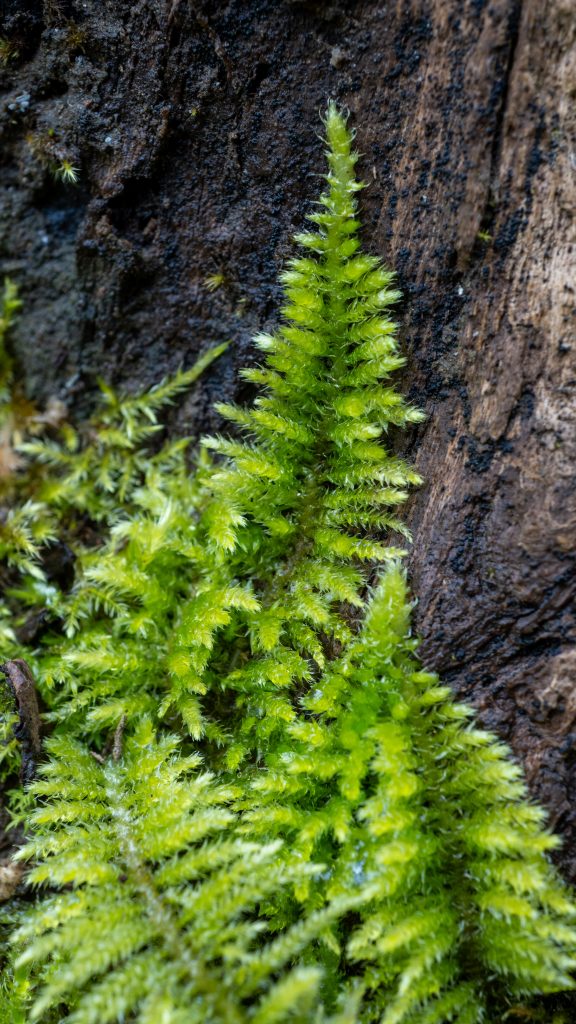
Winter is moss season in Portland. When the rains return and temperatures drop, mosses do something remarkable: they come back to life. Unlike most plants, mosses are poikilohydric — they can lose nearly all their water content, go dormant, and then rehydrate completely when rain returns, picking up their biological work exactly where they left off.
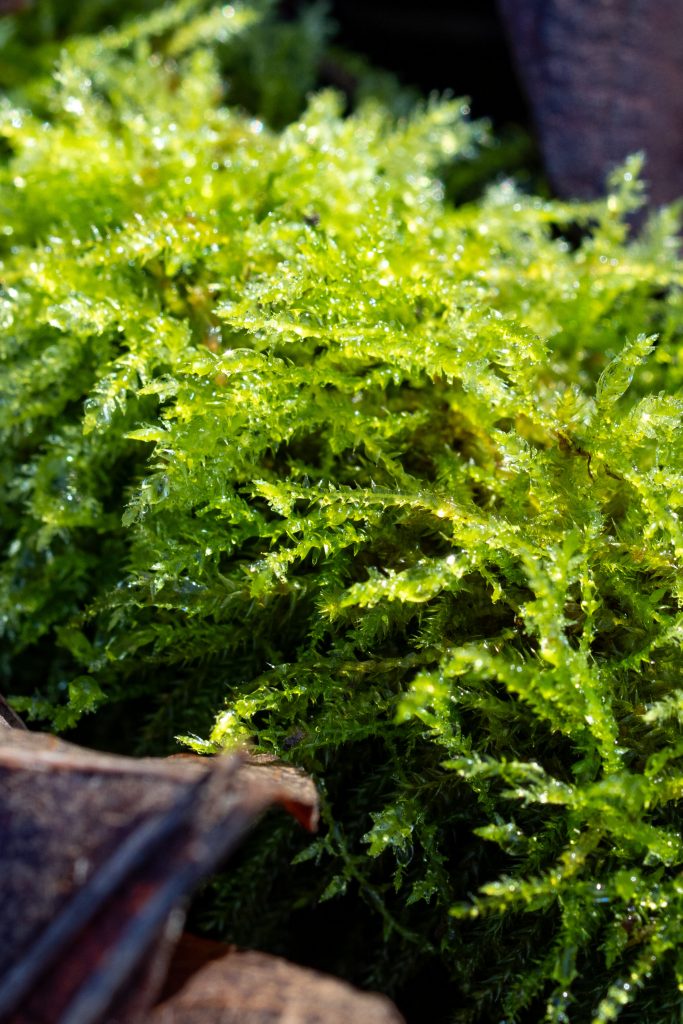
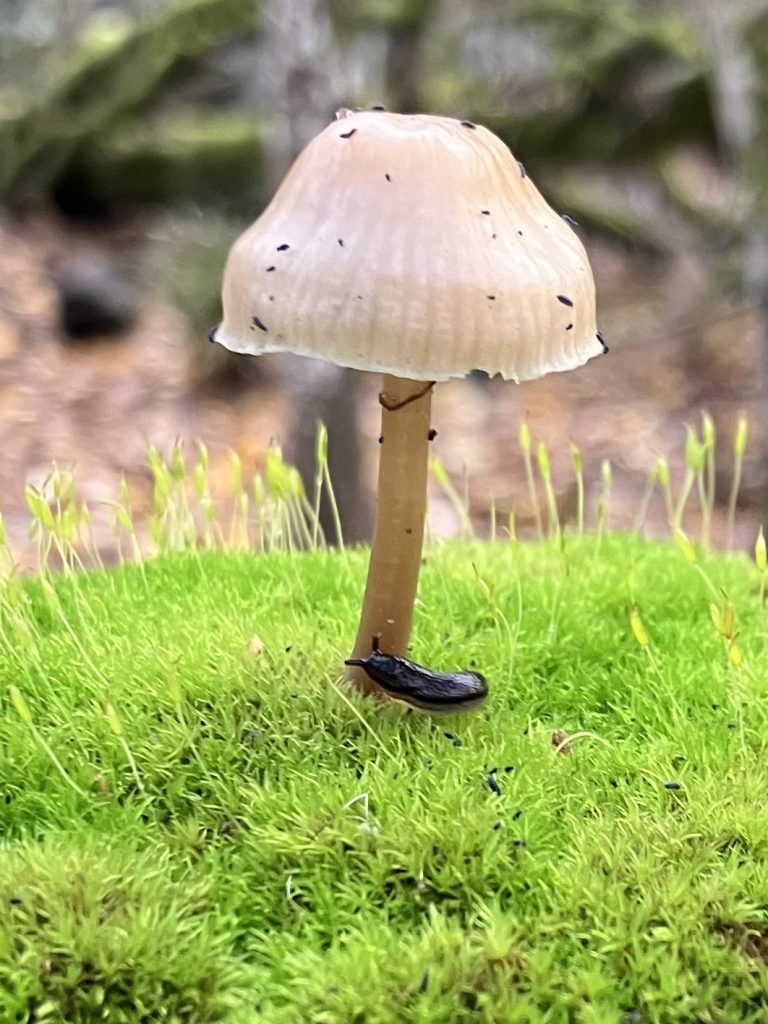
One morning at the Wapato Marsh overlook, I rested my hand near the railing and found myself face to face with a patch of vivid green moss, its sporophytes — the slender spore-bearing stems that grow from the parent plant — reaching upward, each one holding a single shining drop of rain catching the early light. It stopped me cold. Here was an entire world, thriving — and I mean that literally.
A single square inch of moss can shelter hundreds of microscopic creatures: water bears called tardigrades, mites, nematodes, springtails, fungi, and bacteria, all living within the architecture of those tiny leaves. The patch on the railing was not decoration. It was a neighborhood.
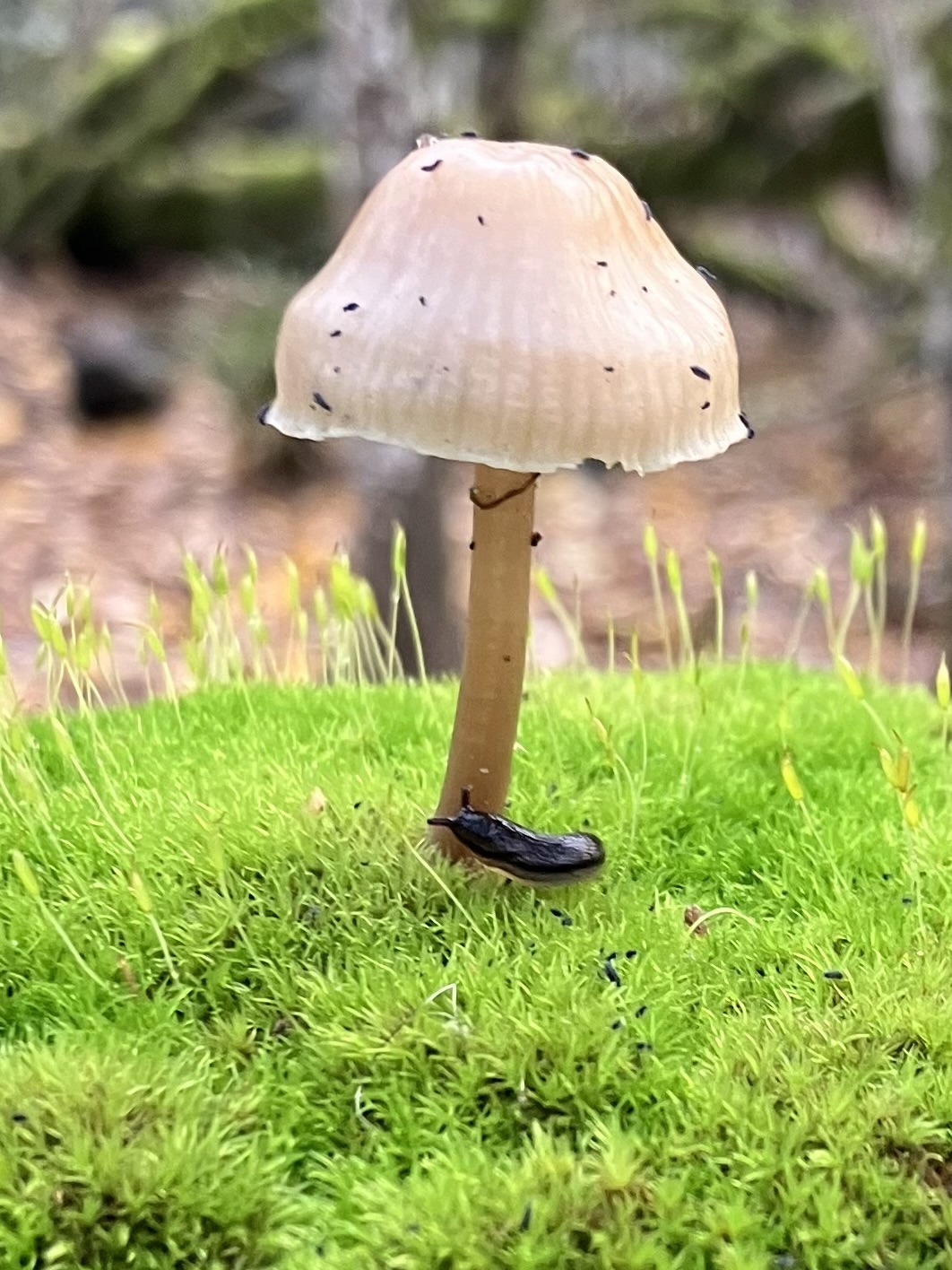
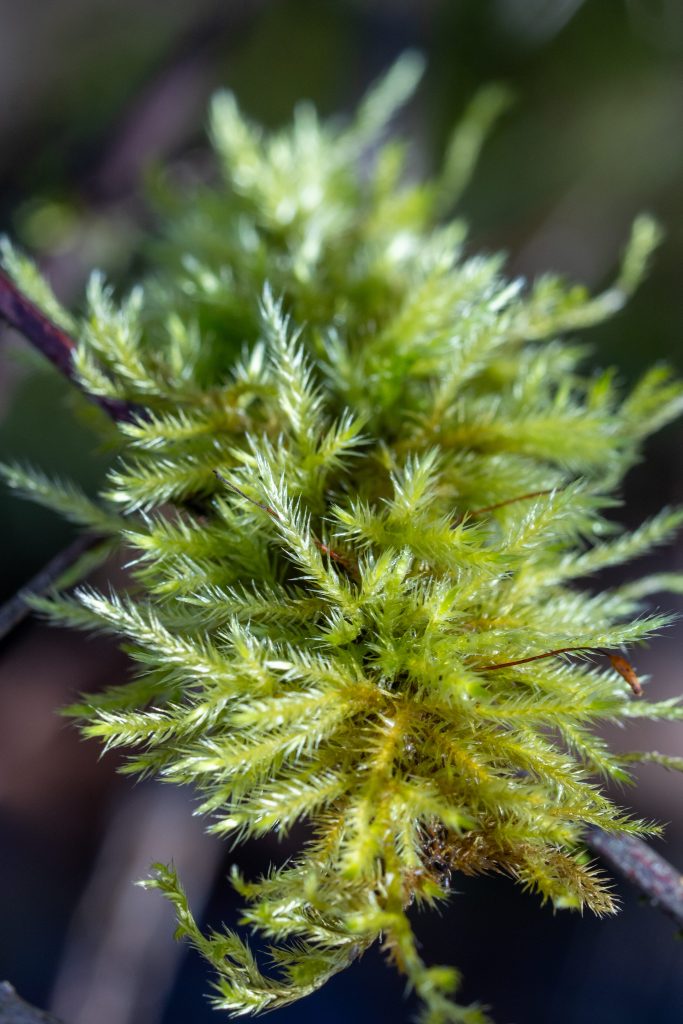
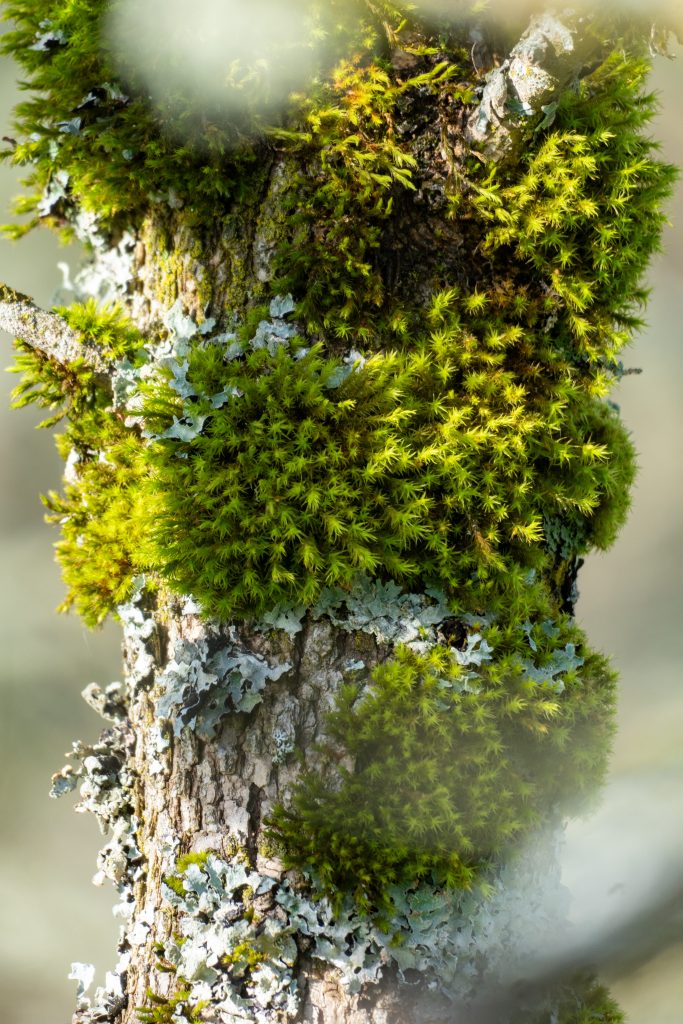
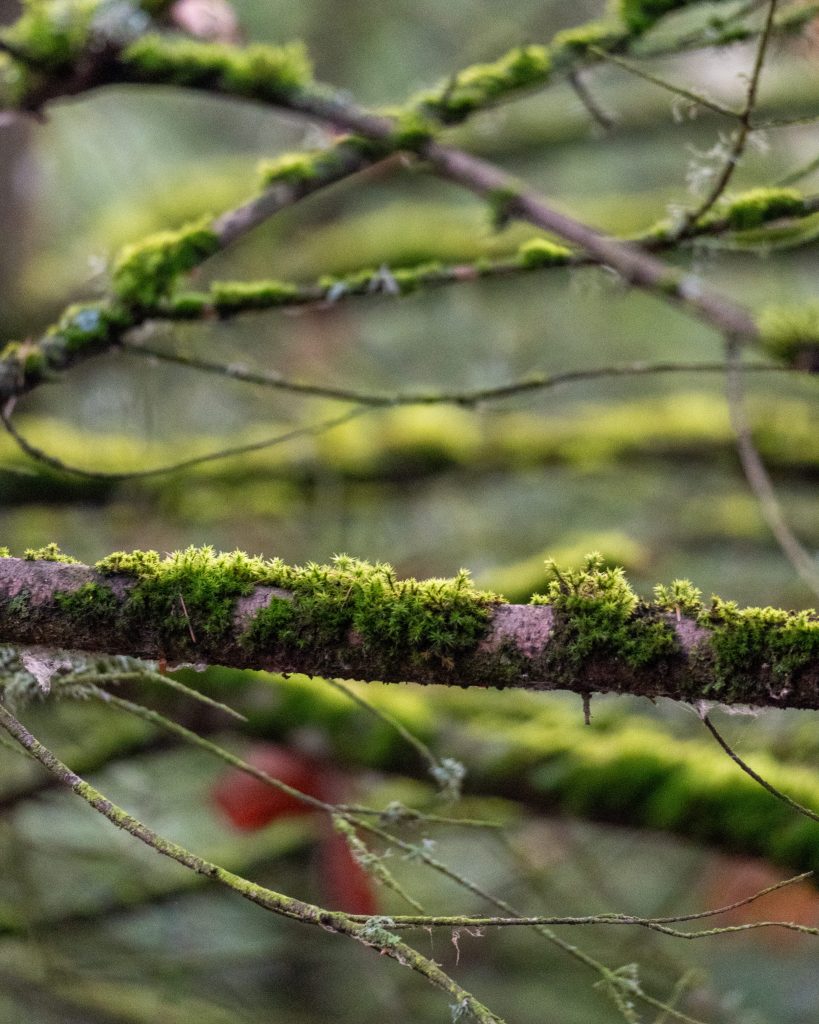
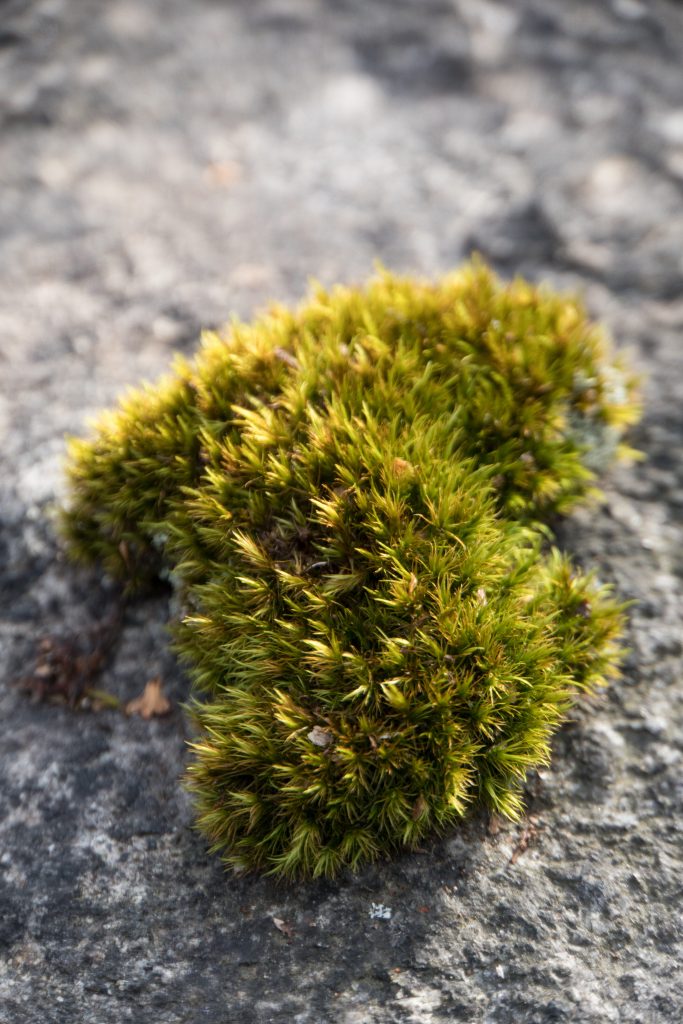
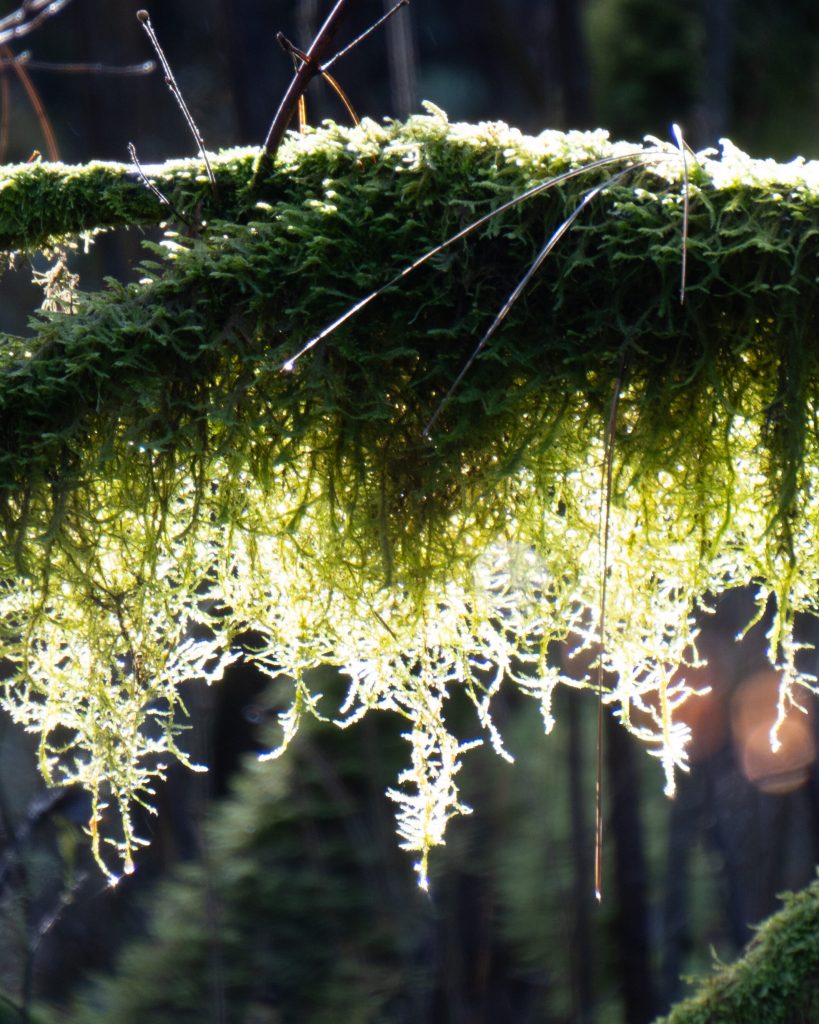
Stop to take in the mosses of Oaks Bottom – they support worlds of their own. Photo: Rosalind Jackson
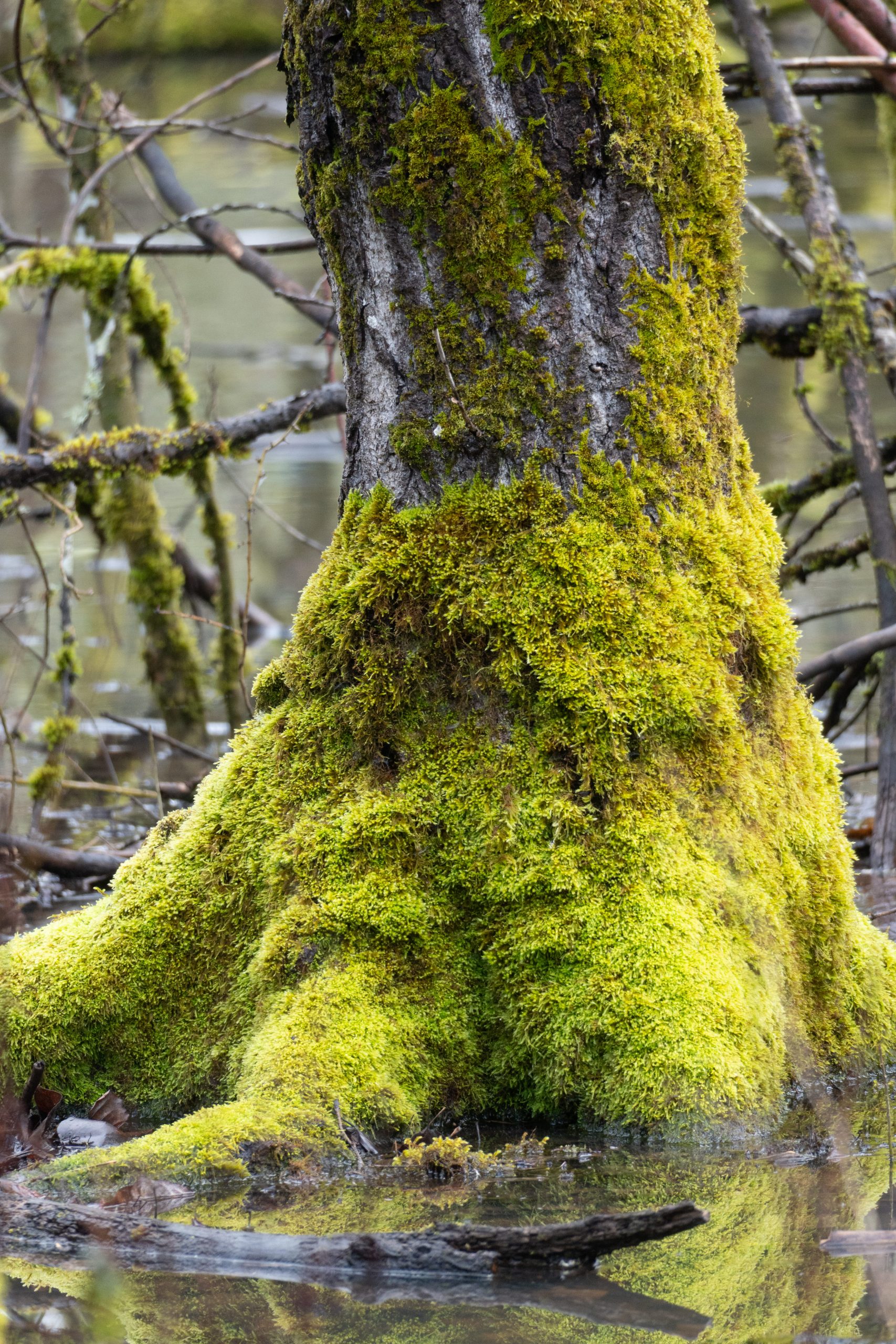
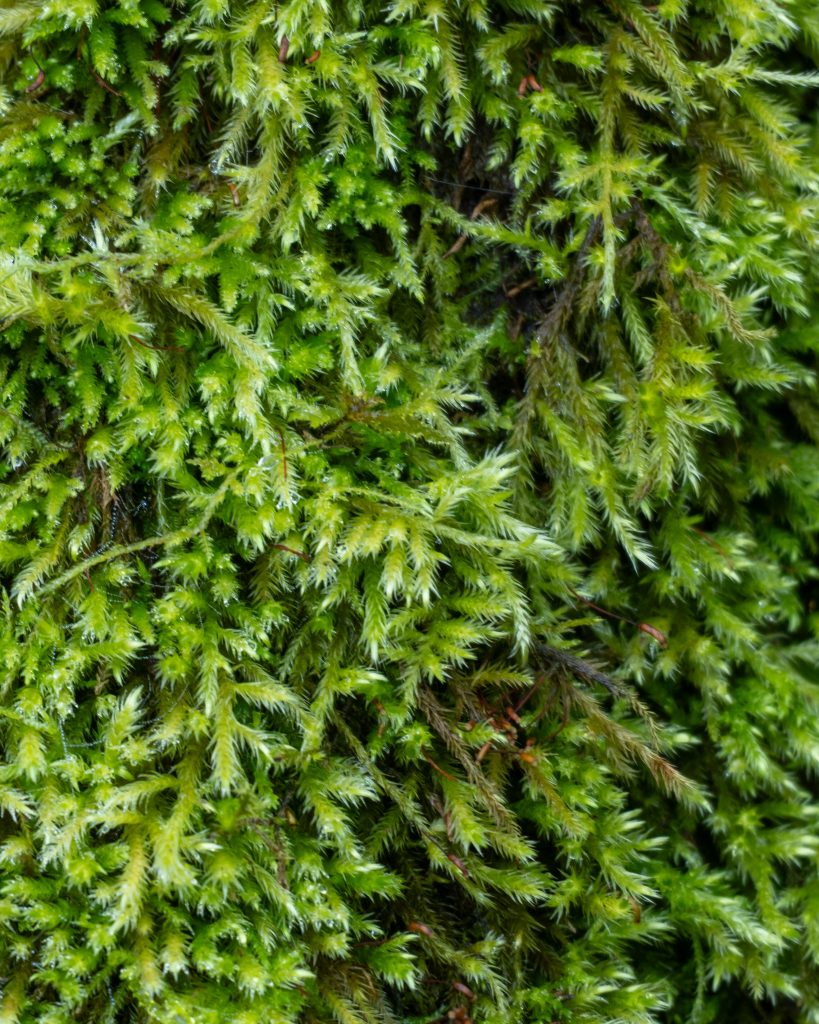
We live in one of the mossiest places on earth. The Pacific Northwest is home to over 700 of the world’s 12,000 to 15,000 known moss species. At Oaks Bottom you might find Oregon Beaked Moss (Kindbergia oregana), its fronds soft as velvet, or the layered, glistening Step Moss (Hylocomium splendens), also known as Stair Step Moss for the way each year’s growth fans out in a new tier above the last. These are not weeds or background texture. They are ancient, sophisticated organisms that have been perfecting their craft for 450 million years — long before the first tree ever cast a shadow.
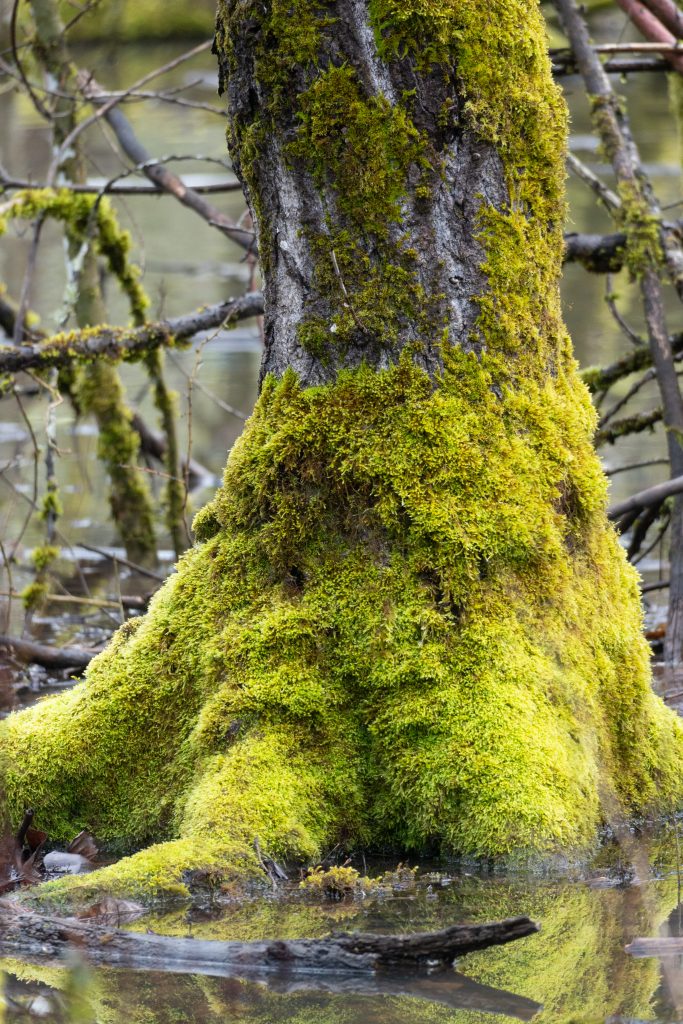
Botanist and author Robin Wall Kimmerer, in her book Gathering Moss, invites us to dwell at the limits of ordinary perception — to slow down and attend to what is easily overlooked. Moss, she suggests, rewards exactly that kind of attention. At Oaks Bottom, a single rotting log can host dozens of species, each occupying its own precise microhabitat of moisture and light. And because mosses are exquisitely sensitive to environmental conditions, that thriving patch on the railing is quietly telling you something about the health of this place.
Moss is not merely beautiful — it is doing essential work. Mosses act as a living sponge, absorbing rainfall and releasing it slowly, buffering the surges that follow winter storms. In a floodplain like Oaks Bottom, that work matters deeply.
Humans have long known moss’s value. Indigenous peoples of the Pacific Northwest used moss to line cradles and boots, clean and store salmon, and as highly absorbent material for infant care. During World War I, Sphagnum moss was used as wound dressing because it can hold up to 22 times its own weight in liquid — twice the absorbency of cotton. Long before we invented the materials we now take for granted, moss was there.
Next time you walk the trails at Oaks Bottom, try Kimmerer’s practice: slow down, get close, and let your eyes adjust to a smaller world. Kneel beside a mossy log. Cup your hand around a patch on a railing. Notice the individual leaves, erect and luminous with moisture, each one a tiny solar panel drinking in the weak winter light. Notice the reproductive stems standing at attention, each perhaps holding its own small, perfect drop of water catching the sky.
The moss has been here far longer than we have. It will be here long after us. But right now, in the rain and the grey and the quiet of February, it is asking for just a moment of your attention.