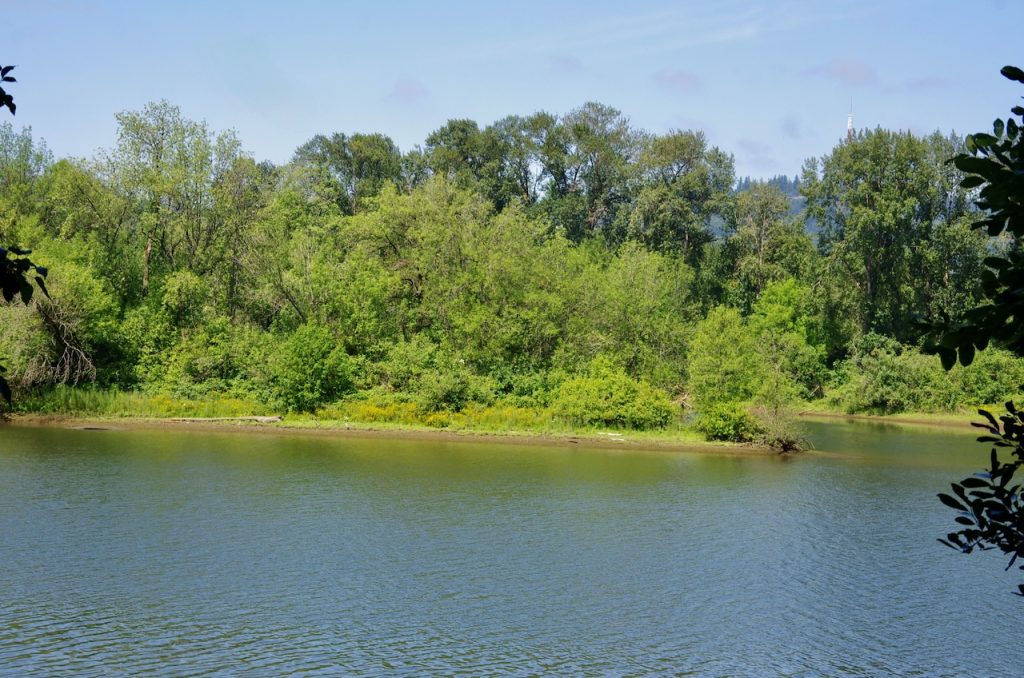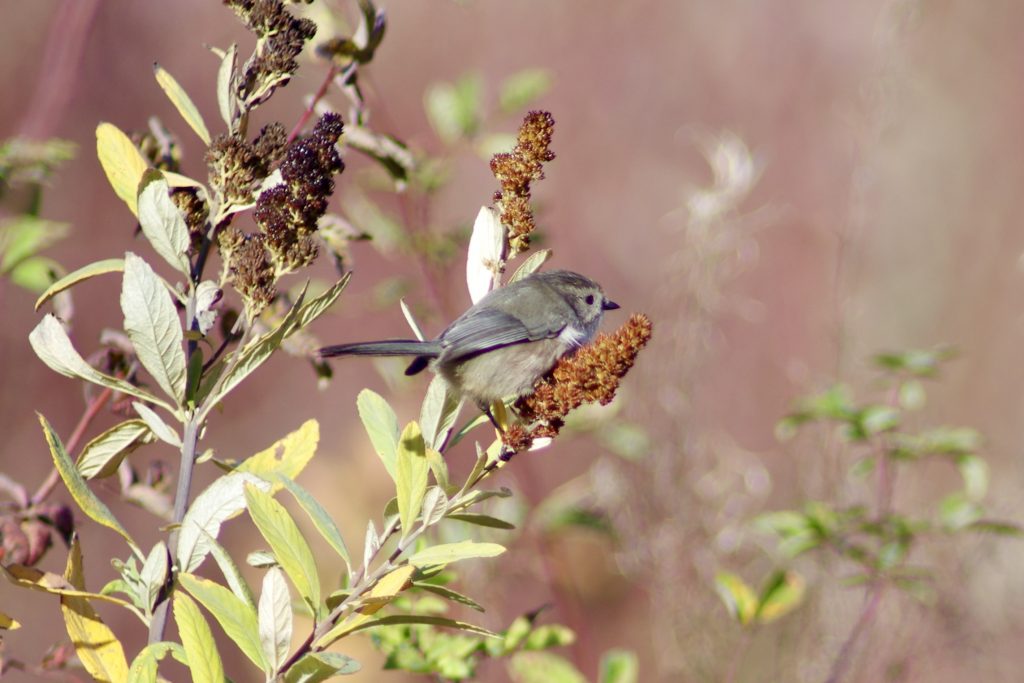
iNaturalist is a great app for exploring the biodiversity in your area, and especially shines in natural spaces, like Oaks Bottom. Often people start out using it as a plant identification app, and for many that’s all they’ll ever need or want from it. In this use alone it already does a better job than many plant identifiers — the app’s automated species identification tool will make ID suggestions on the photos you upload, but what sets it apart from other apps is what happens next!
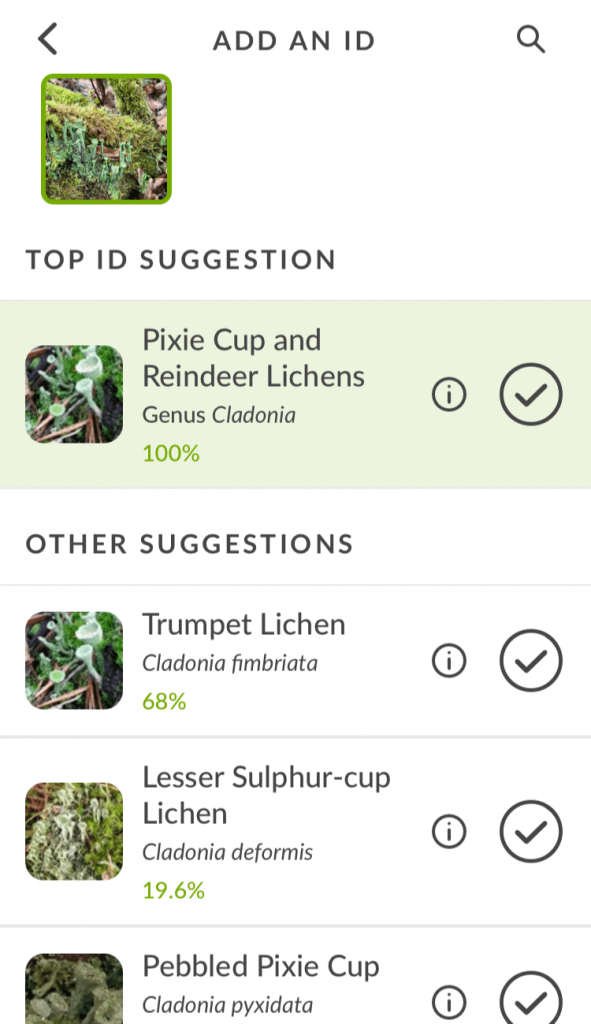
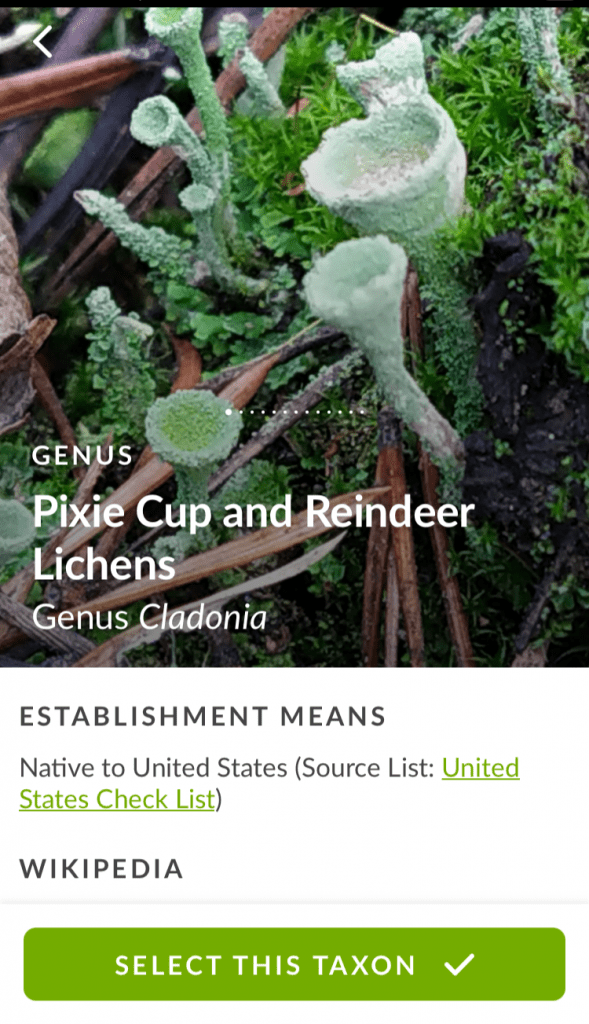
Right: when selecting one of the provided IDs, you can view photos and information about the suggestions.
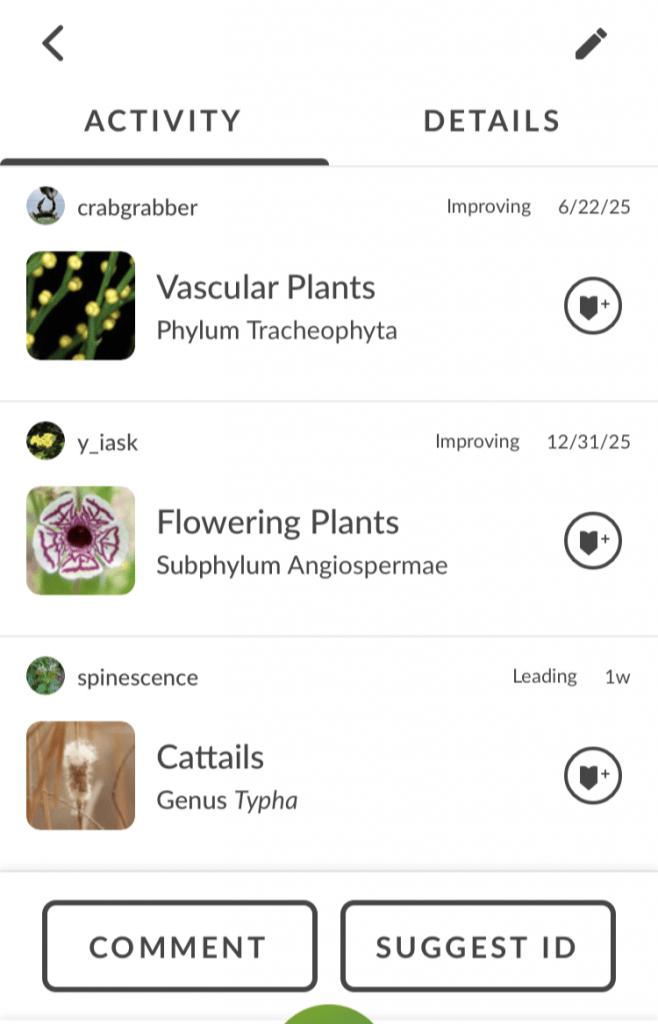
Because iNaturalist is a social network of community scientists, naturalists, and biologists, when you upload a plant “observation”, other people are likely to look at your upload. At this point they can either verify the ID you selected, correct it, or narrow it down. If you choose a broad ID, such as family, others may help to identify the exact species.
While the built-in identifier only looks at one photo, uploading multiple images to an “observation” can help humans to verify or narrow down the ID. Some iNaturalist users are particularly knowledgeable amateurs, while others are professional scientists, which makes the app an amazing resource. It’s not just for plants, either! You can identify animals, insects, and fungi as well. You can even upload audio observations, to help with identifying birds.
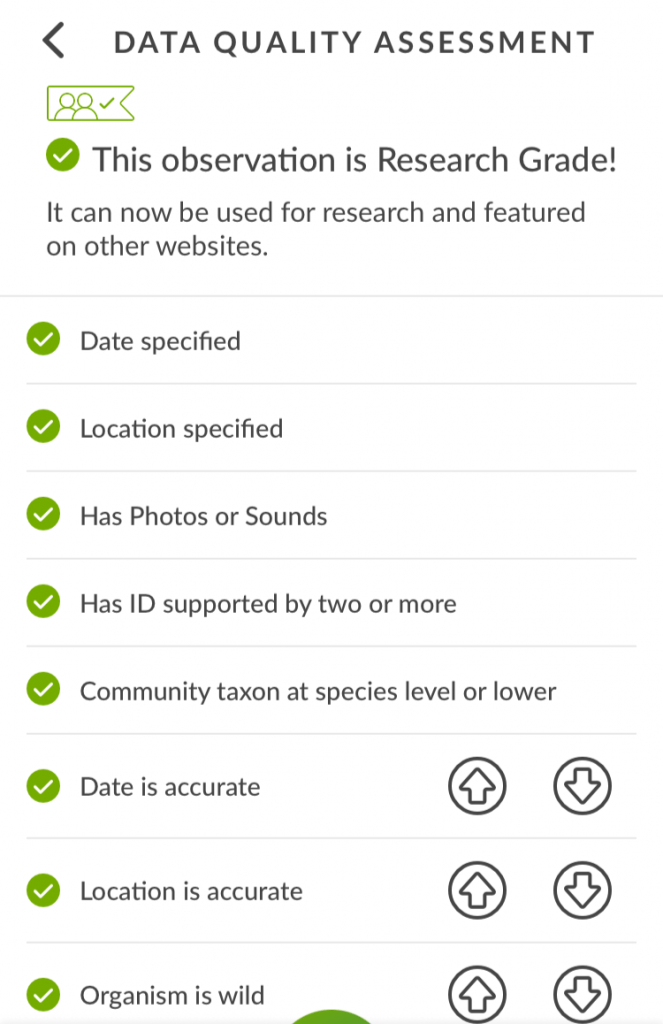
Right: iNaturalist provides “data quality assessments” on observations. “Research grade” observations have specific requirements, including a species level taxon, verified by two or more users.
When you upload an observation, you have the option of providing the location of what you’ve observed. You can also edit the location slightly, in case you don’t want your observations showing up at your home address, for instance. iNaturalist will automatically obscure the location of endangered species, for their protection, so while it might show the general area in which they were observed, it doesn’t give the exact coordinates.
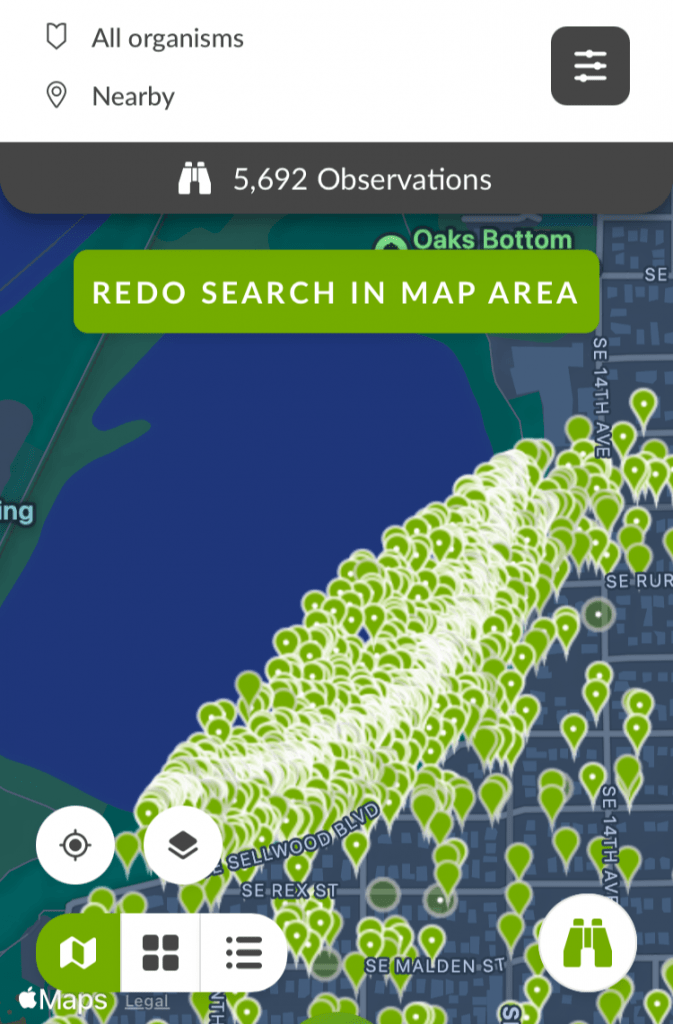
A fun exercise to try out while you’re down in Oaks Bottom is pulling up a map of nearby observations, and seeing what pops up. Some plants are easy to overlook in winter, so if you’re trying to get better at identifying different plants and trees through the seasons, this can be a helpful resource.
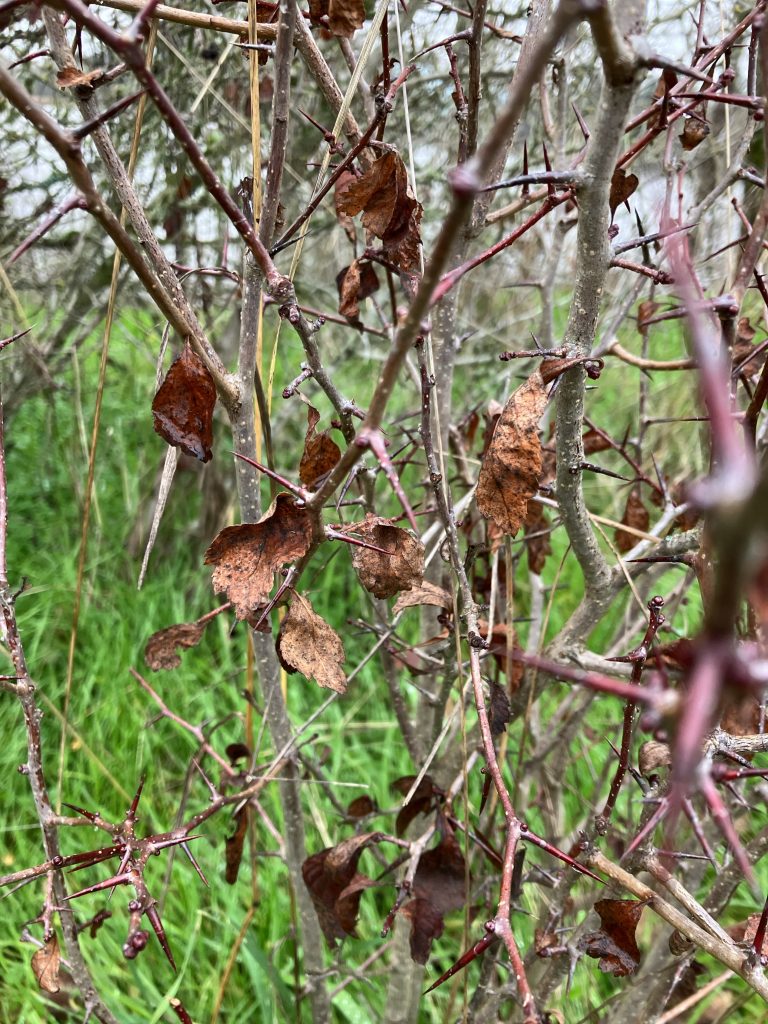
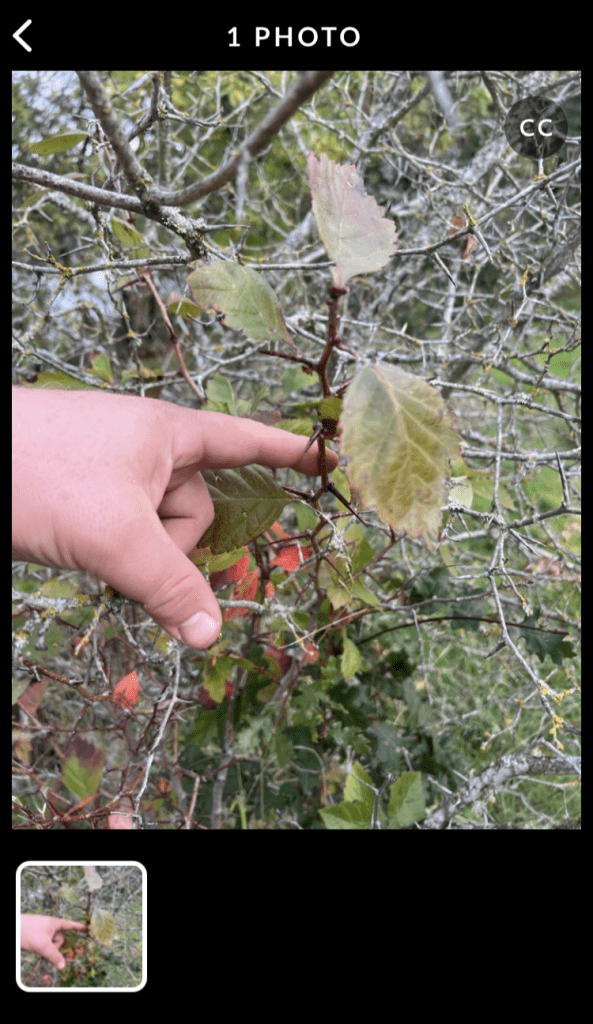
Right: Black Hawthorn from the same area in October, when the leaves are easier to identify. From an observation by Jeremy Rappaport.
iNaturalist is a “community science” project, meaning it harnesses the power of the general public to help with scientific research, and there’s lots to do beyond using it as an identifier. Scientists use it to crowdsource data on biodiversity, and if you choose, you can set your photos to include a creative commons license, so that they can be used in research projects.
You can also become one of the people helping to identify species, if you’re so inclined. It’s best practice not to add IDs that you aren’t confident about, but the iNaturalist website provides learning materials for this purpose. New species have even been identified, while others, which had been thought to be extinct, have been found alive, thanks to the iNaturalst app. The photo you take of a weird bug could become a new scientific discovery!
Users are able to create and contribute to “projects” on the app, and as you upload observations you may notice some of them getting added to “bioblitz” projects. These projects collect observations within a set region and timeframe. Members of the Friends of Oaks Bottom steering committee have participated in the past, adding observations within Oaks Bottom.
Even if you choose not to take a more active role in projects and identifications, just uploading your own observations can be a helpful contribution to researchers. It can also be a lot of fun looking back through your observations! I use iNaturalist when I travel, and love reviewing the new species I encountered in other locations.
If you upload observations from someplace like Oaks Bottom relatively often, you can also track how things change over the course of a year. This can be really helpful if you’re trying to figure out when to look for trilliums or camas lilies, for instance. Taken a step further, you can use it to keep track of changes in when these seasonal markers occur from year to year.
iNaturalist is a non-profit organization, which started out as a Masters final project by UC Berkeley students in 2008. It has since grown to include millions of users, and contributed to thousands of research papers. Whether you’re trying to identify plants and animals, or are interested in dipping your toe into community science projects, iNaturalist makes it fun and easy to achieve those goals.