by John Sparks
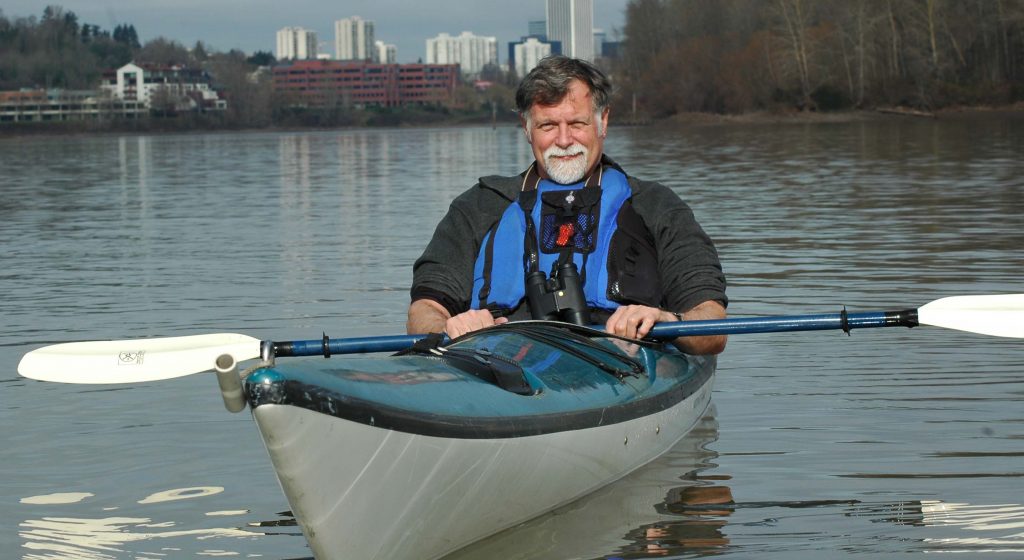
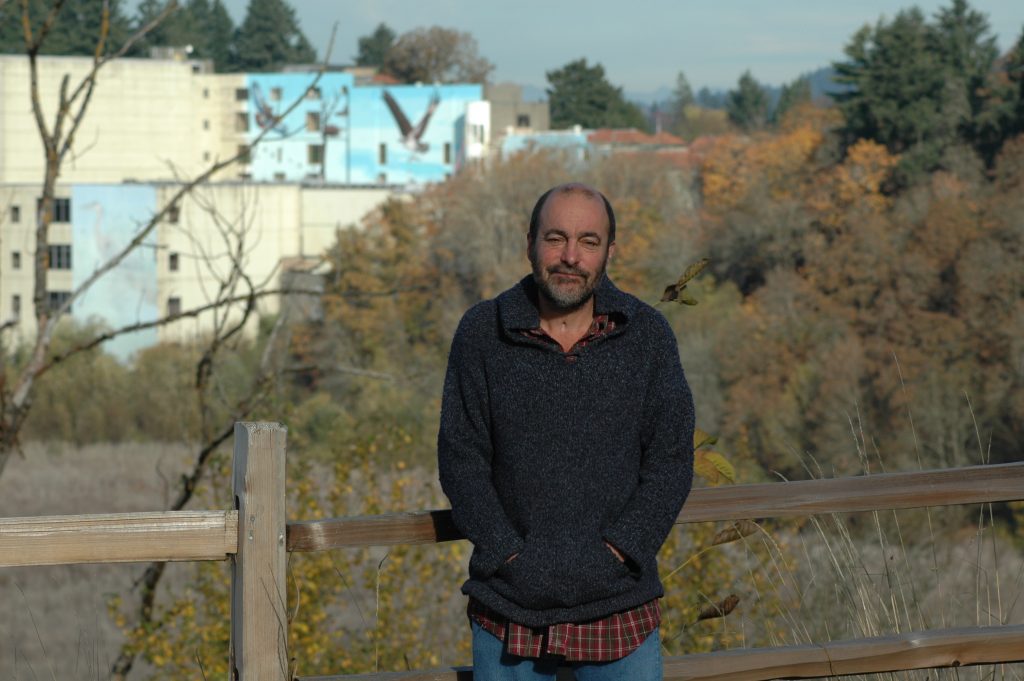
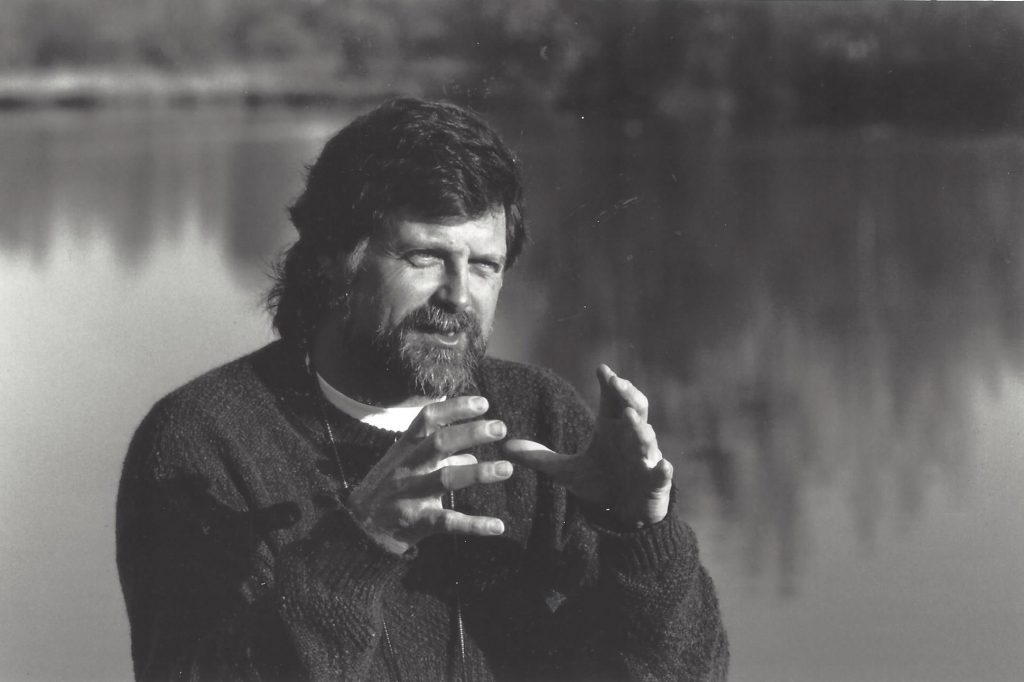
Photo: Robert Liberty
In 1959, the City of Portland acquired most of what is now Oaks Bottom Wildlife Refuge. In the ensuing three decades, the City floated various plans to develop the bottomland, while environmental organizations, including the Audubon Society of Portland (now the Bird Alliance of Oregon), The Nature Conservancy, the Sierra Club, and SMILE (Sellwood-Moreland Improvement League) promoted its protection as a natural area.
One guiding force and principal “agitator” in the campaign to create an urban wildlife refuge was Mike Houck, then the Urban Naturalist for Portland Audubon. Mike is now director of the Urban Greenspaces Institute in Portland, and I recently had lunch with him at the Oaks Bottom Public House in Sellwood.
John: So what were the beginnings of your connection to Oaks Bottom?
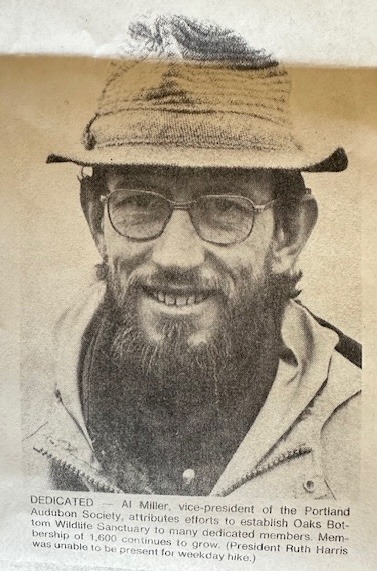
Mike: In 1970, I was attending a Mammalogy seminar at PSU as a graduate student in biology. A lean, gangly, scruffy-looking man with a scraggly red beard, the guest speaker for the day, walked in and made a pitch. It was Al Miller of the Audubon Society. Volunteers were needed to petition the City for the creation of a wildlife refuge at Oaks Bottom. I had never been there, but Mike Uhtoff, a fellow graduate student, and I found ourselves at the Audubon library typing letters to the city council and Portland Parks and Recreation! Al Miller was a very persuasive man.
John: And those early efforts planted a seed but had little effect?
Mike: Correct. And I went on to work at OMSI and Oregon Episcopal School for a few years. After those stints, I found myself working with Al assembling wood stoves when an opportunity came up at Audubon, courtesy Oregon Department of Fish and Wildlife’s [ODFW] nongame program. ODFW offered a $5,000 grant as seed money to support a regional inventory of natural areas in urban areas in compliance with the state’s planning Goal 5, which required each city and county to inventory their natural resources. I came on board as Audubon’s third actual employee at the time and assumed the title of Urban Naturalist.
John: You were going around the state, but what about Oaks Bottom?
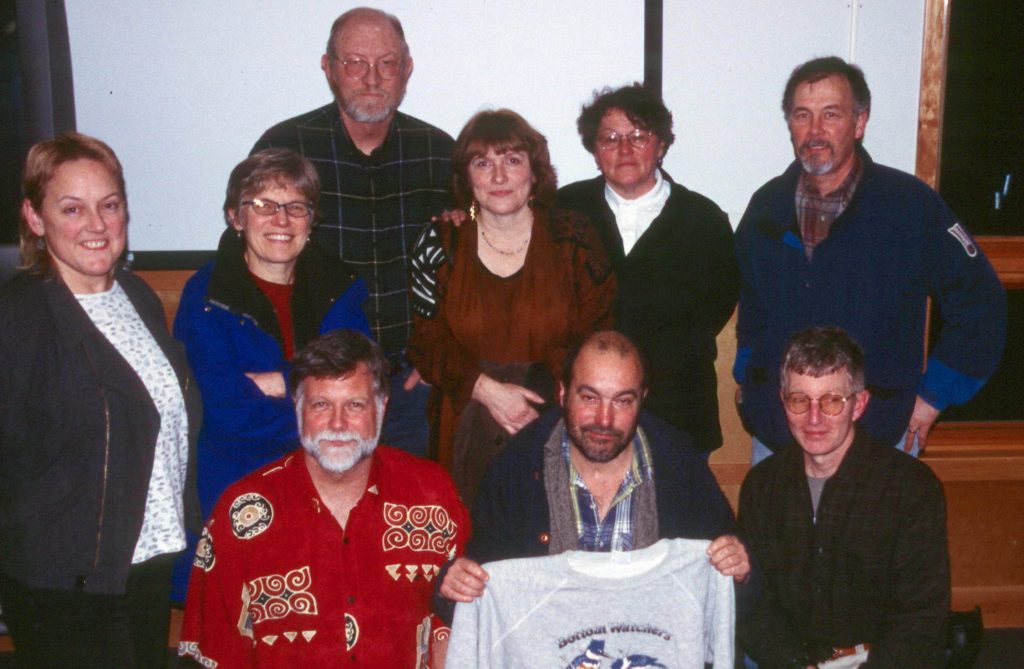
front row (left to right): Mike Houck (Urban Naturalist); Jimbo Beckmann, Ralph Thomas Rogers.
middle row (left to right): Martha Taylor; Martha Gannett (graphic designer); Marie Deatherage (Meyer Trust staff).
back row (left to right): Al Miller (Audubon); Diana Cvitanovich; Jim Sjulin (PPR)
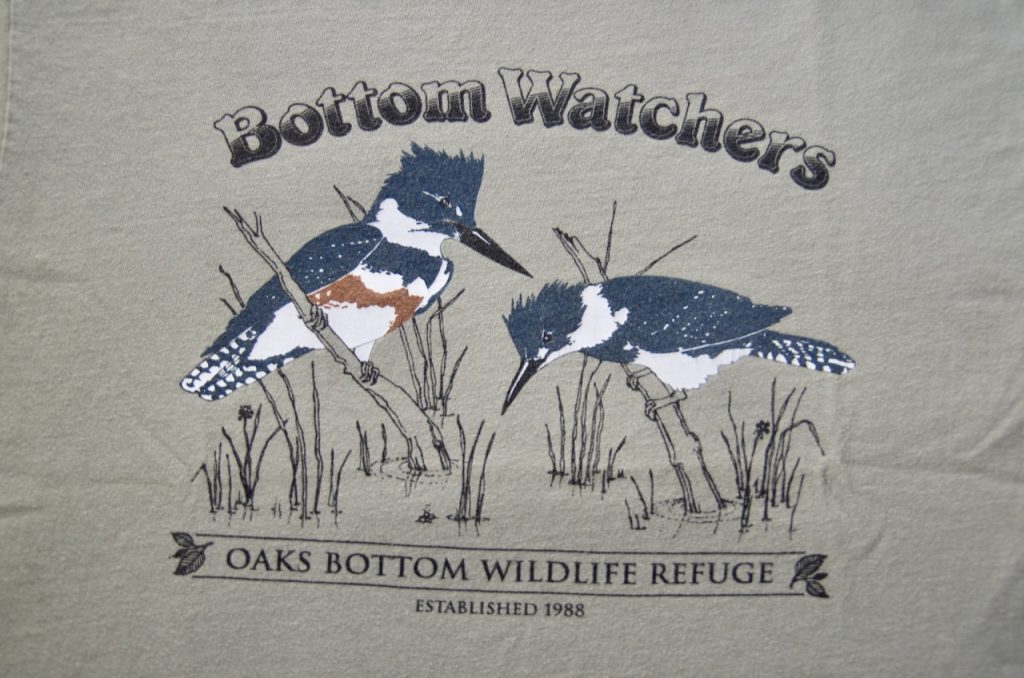
Mike: By that time I was on the Audubon Board and Mike Uhtoff was Director. Also, by then I had been to the Bottom many times. We created the “Bottom Watchers” around 1980, a volunteer group that went into the Bottom and did clean ups and work on the trail, which was constructed by the Youth Conservation Crew in the 1970s but overgrown by blackberries. Martha Gannett, a graphic artist, created a T-shirt design. We were totally an ad hoc group that led nature walks and presented at SMILE’s Sundae in the Park events in Sellwood Park.
John: But there was still no official designation for the area . . .
Mike: No, we had to resort to guerrilla tactics. We managed to cadge 40 bright yellow “Wildlife Refuge” signs from ODFW and spray painted “City Park” below the original wording. With my partner in crime, Jimbo Beckmann, I nailed up the signs all around Oaks Bottom.
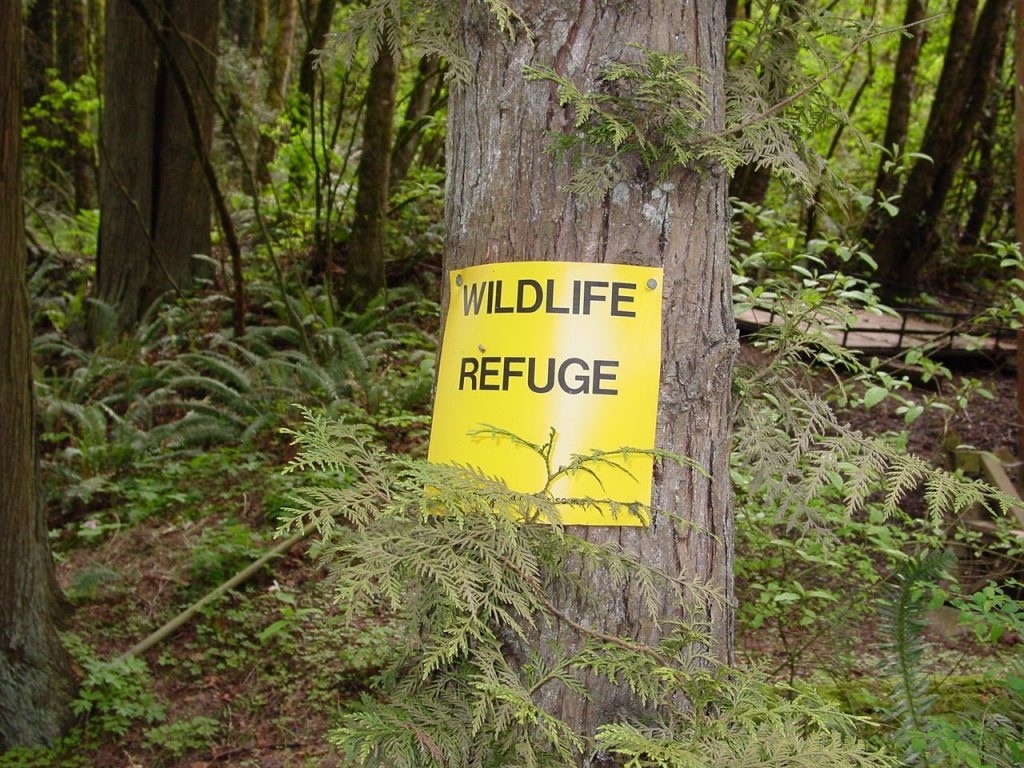
By coincidence, a body was discovered in the Bottom soon after (nothing to do with us), and The Oregonian referred to the location in print as “Oaks Bottom Wildlife Refuge,” a name that became established in the public mind.
John: There were still other battles, though.
Mike: Yes, mosquitoes became an annoyance for the neighborhood, and I got a call from someone in the permits section of the Army Corps of Engineers that they had gotten an application from Multnomah County Vector Control to completely drain Oaks Bottom in order to control mosquitoes. Fortunately, the county’s Peter DeChant agreed that putting in a weir to control water levels would disrupt the mosquito breeding cycle. The levels were established based on Ralph Thomas Rogers’ vegetation inventory he conducted for his Master’s thesis at PSU.
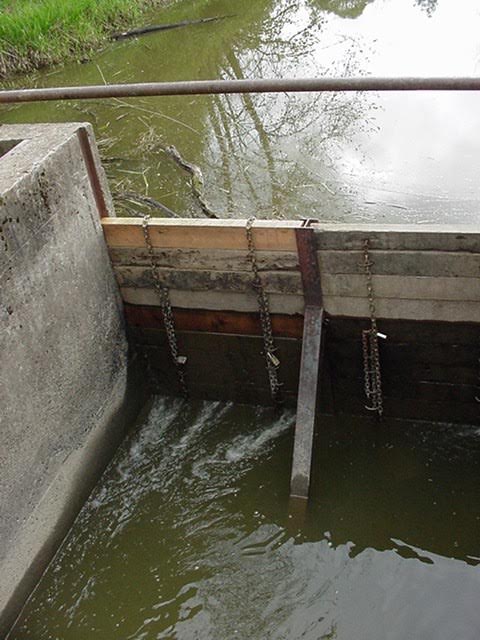
Photo: Darian Santner
In addition to that, we continued to participate in annual cleanups, removing tons of household debris people would dump off the bluff, and helped to maintain the trail, which was overgrown with Himalayan blackberry. We also shored up the trail after multiple small landslides.
John: But finally the City got on board and made everything official . . .
Mike: In 1988, I authored the “Oaks Bottom Wildlife Refuge Coordinated Resource Management Plan,” which was approved by the Portland City Council and Portland Parks [PPR]. It officially established Oaks Bottom as the City’s first official “urban wildlife refuge.” Peggy Olds, of the East Multnomah County Soil & Water Conservation District, Ralph Rogers, of the Army Corps of Engineers, and Dick Pugh, a science teacher at Cleveland High School, helped with parts of the plan.
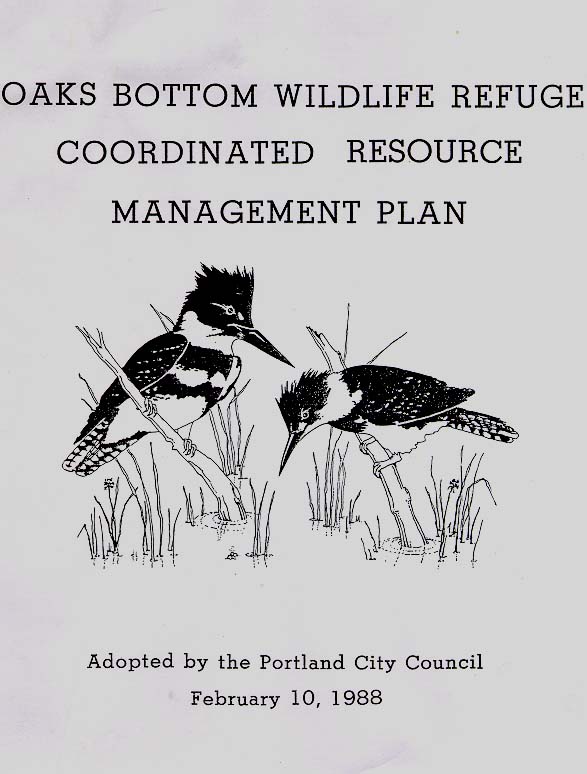
(click to read the whole thing)
That was the point at which PPR’s Jim Sjulin, Steve Bricker, and other staff took over active management management of the refuge. They did that work initially without any resources. It was later when I served on the new PPR Board that we managed to give Jim. Steve, and later Mark Wilson funding to upgrade ecological management of the Bottom.
John: Thank you so much for your time, Mike!
Note: Anyone interested in a broader history of Oaks Bottom (before and after the wildlife refuge concept) can look at our History of Oaks Bottom page.